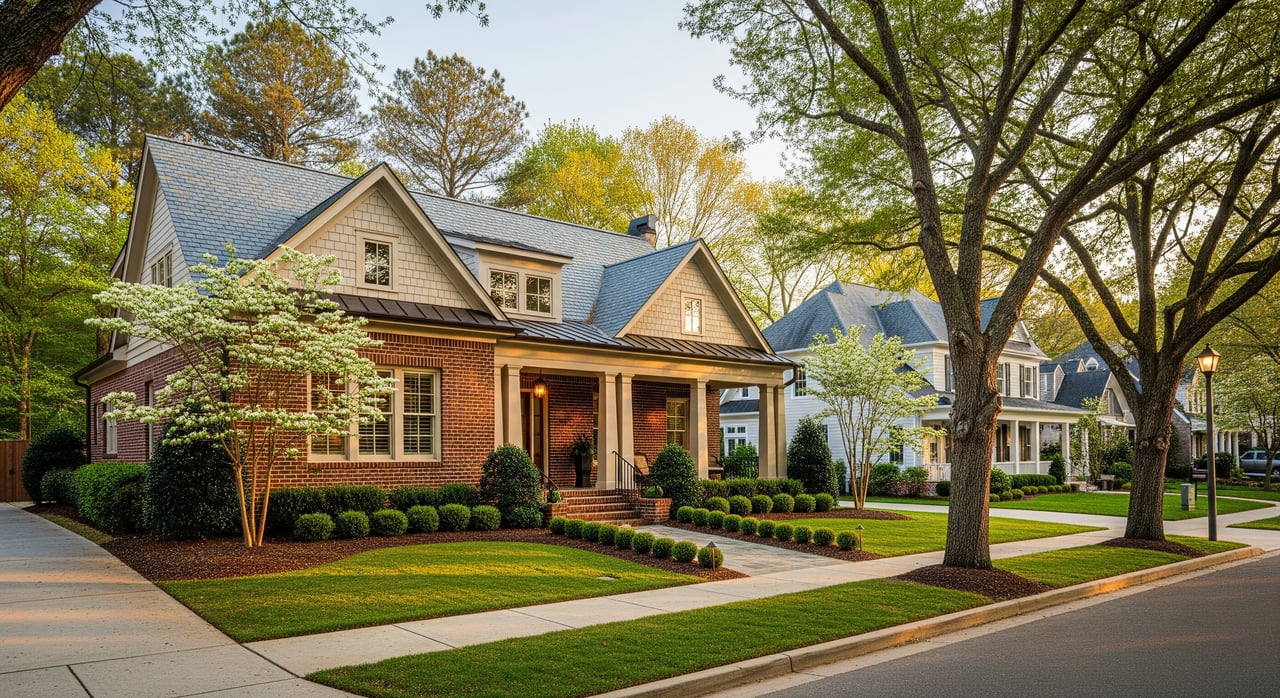
Thinking about a home in Apex and not sure if you want an HOA? You’re not alone. The right choice can shape your daily life, budget, and resale options. In this guide, you’ll learn how HOAs work in North Carolina, what fees typically cover, the tradeoffs vs. non‑HOA homes, and the key due‑diligence steps to protect your purchase. Let’s dive in.
Apex snapshot: HOAs and growth
Apex sits in Wake County within the Raleigh metro and has grown steadily over the last few decades. Population growth and new construction have brought many planned subdivisions with homeowner associations alongside older, non‑HOA neighborhoods. For a quick look at local growth trends, review the U.S. Census QuickFacts for Apex.
Newer planned communities, townhome and condo developments in Apex are more likely to have HOAs. Older single‑family neighborhoods and rural or infill areas are often non‑HOA. The Town of Apex handles permits, zoning, and code enforcement, but not private covenants. You can see local planning resources on the Town of Apex Planning Department page.
NC HOA rules in plain English
In North Carolina, HOAs are governed by recorded documents such as the Declaration of Covenants, Conditions and Restrictions, plus bylaws and rules. Many planned communities fall under North Carolina’s Planned Community Act, Chapter 47F, which covers things like assessments, meetings, and record access.
Key points for you as a buyer:
- Covenants run with the land and bind future owners.
- You have the right to review association documents and certain records before closing.
- Associations can levy assessments, impose fines under the rules, and place liens for unpaid dues.
If you have a dispute or a complex question about enforcement or rights, it’s wise to consult a North Carolina real estate attorney.
What HOA dues usually cover
Every community is different, but Apex HOAs often provide:
- Common‑area maintenance: landscaping, parks, entry monuments, trails, streetlights on private roads
- Amenity upkeep: pools, clubhouses, playgrounds, sport courts, sidewalks
- Exterior services in some communities: roof, siding, exterior paint, and lawn care for townhomes or condos, or lawn care for certain single‑family neighborhoods
- Trash and recycling or negotiated rates in some subdivisions
- Insurance for common elements and a master liability policy
What dues usually do not cover:
- Interior repairs or your personal property
- Most utilities and municipal services like water, sewer, and public street maintenance
- Your mortgage or property taxes
Dues can be billed monthly, quarterly, or annually. Associations maintain operating budgets and should fund reserves for long‑term repairs. Best practices include reserve studies to forecast big-ticket needs. Learn more about reserves from the Community Associations Institute.
Special assessments can occur when reserves are short or an unexpected project arises. This is a key risk to evaluate before you buy.
Lifestyle tradeoffs to weigh
Benefits of an HOA community:
- Predictable look and feel. Appearance standards can protect curb appeal.
- Amenities close to home. Pools, trails, and clubhouses add lifestyle value.
- Less maintenance in some neighborhoods. Exterior care can be included.
Potential drawbacks:
- Restrictions. An architectural review may be required for exterior changes. There may be rules on parking, fencing, home businesses, and rentals.
- Ongoing dues. Fees add to monthly costs.
- Rule enforcement. Not everyone wants oversight of paint colors, yard decor, or storage.
Non‑HOA pros and cons:
- More control and flexibility over your property and projects.
- No HOA dues, though you still cover all maintenance and services.
- Neighborhood appearance can vary, which some buyers prefer and others do not.
Costs, financing, insurance basics
- Budgeting: HOA dues add to your monthly housing cost, even if they replace some maintenance.
- Special assessments: Ask about reserve levels and any planned assessments to avoid surprises.
- Insurance: Confirm what the master policy covers and what you must insure. Condo owners typically need HO‑6 coverage for interiors, while single‑family owners need a standard homeowners policy.
- Financing: For condos and some attached projects, lenders may require project approval. FHA and VA loans have specific rules. You can learn more on the HUD page for condominium project approval.
How to confirm HOA status
There is no single statewide HOA registry, so use several sources:
- Check the recorded deed, plat, and covenants in public records. Start with the Wake County Register of Deeds.
- Look up the parcel and prior sales via the Wake County real estate search.
- Review the MLS listing and ask the listing agent or seller.
- Contact the neighborhood or management company if listed.
Quick due diligence checklist
Use this condensed list while you shop and during your inspection period:
- Is the property in an HOA? What is the exact legal name?
- Dues amount and frequency. What’s included and what is not?
- History of fee increases and any special assessments.
- Rules on exterior changes, rentals, pets, parking, signage, and home businesses.
- Operating budget, reserve study or reserve balance, and recent financials.
- Minutes from the past 6 to 12 months.
- Current litigation, insurance claims, or planned capital projects.
- Delinquency rate and collection policies.
- Management structure: professional manager or volunteer board only?
Red flags to watch for
- Low reserves or no recent reserve study
- Frequent special assessments or planned large assessments
- Ongoing lawsuits or major insurance claims
- High delinquency rates on dues
- Visible deferred maintenance in common areas
If you spot a red flag, dig in. Ask questions, request clarifications in writing, and consider your options during the due diligence period.
How Phillip helps you decide
Here’s a simple plan to move forward with confidence:
- Confirm HOA status early. Phillip verifies the HOA’s legal name, management contact, and requests documents.
- Gather and review documents before waiving contingencies. Phillip organizes CC&Rs, rules, budgets, reserves, minutes, and the resale certificate, and highlights key items.
- Evaluate fees and inclusions vs. your budget. He breaks down what dues cover and what you still need to insure or maintain.
- Screen for red flags. Phillip checks reserves, assessments, litigation, and delinquency rates and can suggest negotiation strategies.
- Coordinate with your lender and insurer. This is essential for condos and attached homes. Phillip connects you with local pros who know Apex communities.
- Protect your offer. Include an HOA‑document review contingency and confirm there are no HOA liens before closing.
- Visit at different times. Phillip can schedule day and evening visits to see parking, noise, and amenity use.
Ready to compare specific Apex neighborhoods and see what fits your lifestyle and budget? Reach out to Phillip Singer to get a personalized short list and a clear plan.
FAQs
Will an HOA stop me from remodeling?
- Not usually. Interior projects are often fine, but exterior changes often need architectural review and written approval per the community’s rules.
Can an HOA make me change paint or roofing?
- If the documents require uniform standards or assign exterior upkeep, the association can enforce appearance rules and require compliance under state law and the CC&Rs.
Are HOA dues tax‑deductible for a primary home?
- Generally no. There can be exceptions for rental properties or business use. Check with a tax professional for your situation.
What if a neighbor does not pay dues?
- Associations can levy fines, suspend certain privileges, and place a lien for unpaid assessments, following North Carolina statutes and the HOA’s collection policy.
Will an HOA affect FHA or VA financing?
- For condos and some multi‑unit projects, lenders often require project approval. Single‑family homes in an HOA are usually eligible, though lenders may still review HOA documents.